
Last updated October 15, 2026
 Caps & crowns
 Masonry repair
Level 1 sweep and inspection to the NFPA 211 annual standard - flue, crown, cap, and flashing checked and photographed
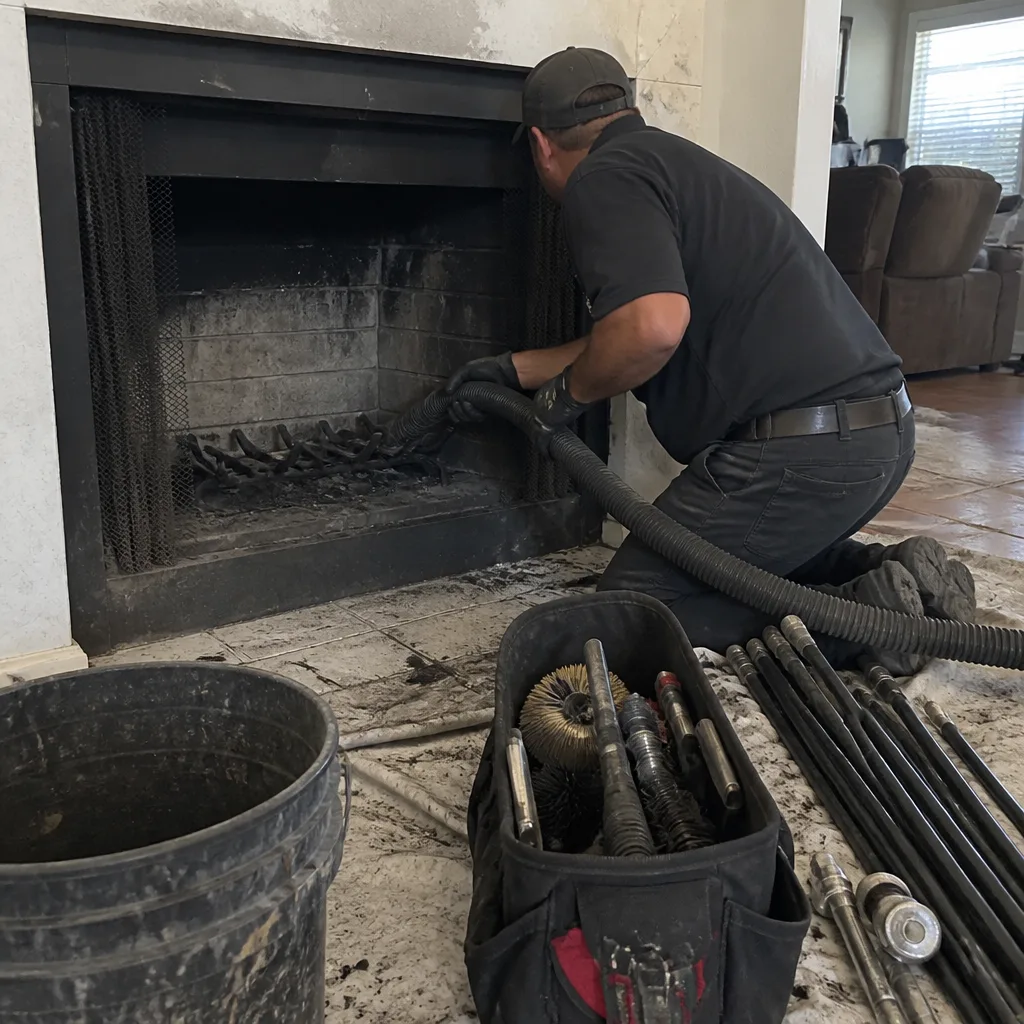
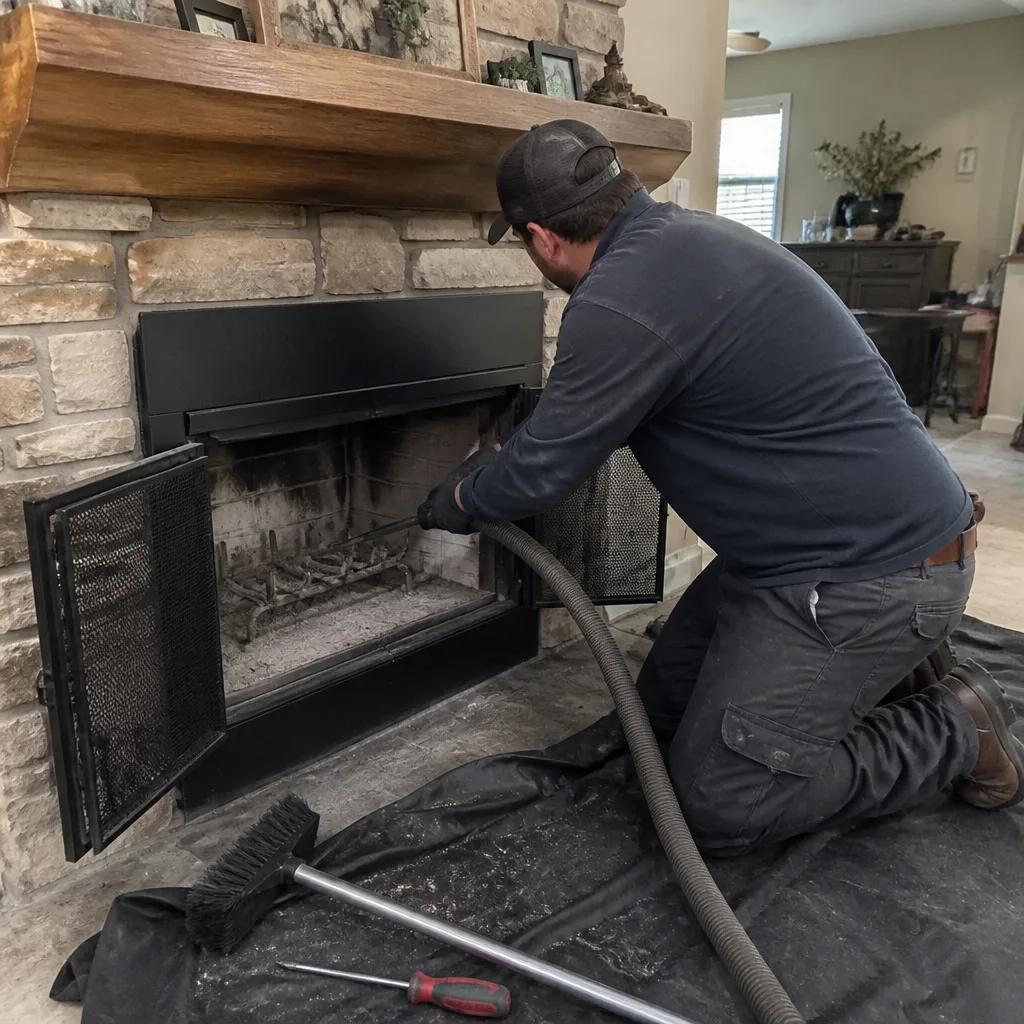
Chimney sweep logs do not sweep chimneys. They loosen some creosote - which then falls where a brush and vacuum still have to collect it.
Chimney Cleaning Warning Signs: A Tampa Homeowner’s Reference Guide
If you’re waiting for smoke to back up into your living room before calling a chimney sweep, you’ve already missed four or five warning signs that showed up in your attic, on your ceiling, and behind your fireplace insert weeks earlier. Tampa’s humidity, storm cycles, and long stretches of fireplace inactivity create failure patterns that generic chimney guides never mention. This reference walks through the specific indicators we look for on homes throughout Tampa, from efflorescence staining on exterior chases to rust streaks that tell a very specific story about your liner. By the time you finish, you’ll know exactly what to inspect, when to act, and which symptoms can safely wait.
Quick Answer
The most common early chimney warning signs in Tampa are white mineral staining (efflorescence) on the exterior chase, rust streaks inside the firebox, musty smells that get stronger after rain, soft or crumbling mortar at the crown, and draft changes you can feel with your hand at the fireplace opening. These appear months before any visible smoke backup or strong creosote odor and are almost always tied to moisture intrusion rather than basic soot buildup. If you’re seeing any of these, a professional inspection is the next step: Hadley Chimney Tampa offers free estimates at (850) 790-3475.
Styles & brands we work with
Table of Contents
- White Efflorescence Staining on the Exterior Chase
- Rust Streaks Inside the Firebox
- Musty Smells That Get Stronger After Rain
- Soft or Crumbling Mortar at the Crown
- Animal Intrusion Indicators: What Squirrels, Raccoons, and Chimney Swifts Leave Behind
- The Two-Minute Damper Draft Test
- Post-Storm Chimney Checks: Cap, Flashing, and Crown
- Common Mistakes to Avoid
White Efflorescence Staining on the Exterior Chase
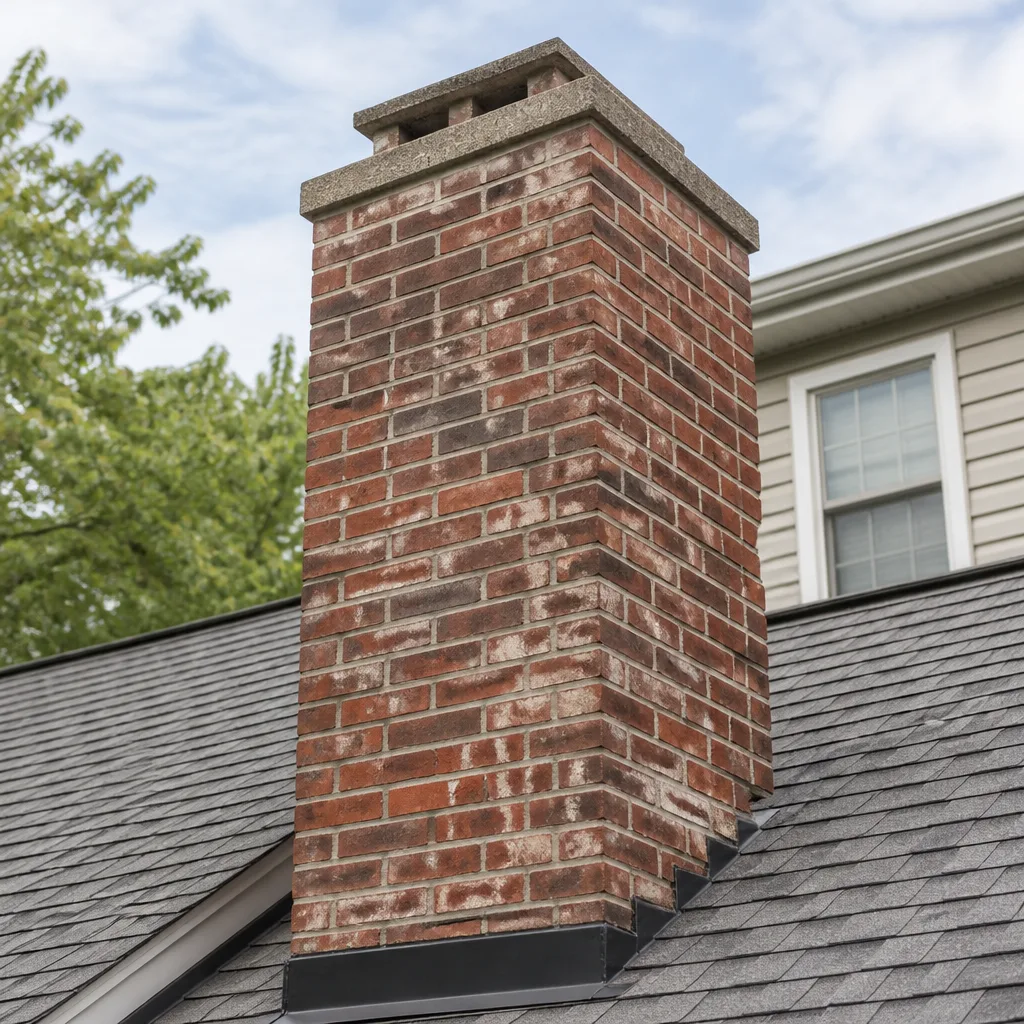
Efflorescence is the white, chalky mineral deposit that appears on brick, stucco, or stone surfaces. It forms when water moves through masonry, dissolving salts inside the material, then evaporates and leaves those salts behind on the surface. On a chimney, efflorescence is never just a cosmetic issue. It’s physical evidence that water is actively moving through your chimney’s exterior structure, and in Tampa’s climate, that movement is nearly constant from spring through fall.
Homeowners often mistake efflorescence for paint overspray or simple dust. The distinction matters. Efflorescence has a crystalline, almost fuzzy appearance and tends to follow the path water takes: vertical streaks below the crown, patches that flare around cracks, or a general whitening across the entire chase. If you swipe it with a finger and it feels slightly gritty rather than powdery like dust, that’s another tell.
Why does this matter more in Tampa than in drier climates? Our humidity keeps masonry damp for weeks after a rain event. That means the salts keep dissolving and recrystallizing, which gradually weakens the mortar and creates micro-fractures. The efflorescence you see on the outside is telling you about structural deterioration happening on the inside.
What to do: Take photos from several angles and note whether the staining changes after rain. If it’s new or spreading, a professional chimney inspection will identify where water is entering: a cracked crown, failed flashing, or porous brick are the usual Tampa suspects.
Rust Streaks Inside the Firebox
Rust inside the firebox is one of the most misunderstood indicators in chimney health. Homeowners often assume it’s from humidity or from burning damp wood. In our experience across Tampa, rust streaks in the firebox typically point to something else entirely: water getting into the flue from above and running down past the damper, or condensation forming because the chimney can’t breathe properly.
Here’s how to read what you’re seeing. If rust appears near the top of the firebox or is streaking down from the damper area, water is coming in from the top: a missing or damaged chimney cap, a deteriorated crown, or flashing that’s separated from the roofline. If rust collects in a pool at the firebox floor, that’s often condensation. Warm, humid Tampa air gets trapped in a chimney with a damper that doesn’t seal, condenses on the cooler flue walls, and drips down.
Rust is also an early warning about your damper and any metal components above it. Once the damper plate starts corroding, it warps. A warped damper never seals properly, which accelerates the condensation cycle and makes the problem worse each season.
What to check right now: Look at the pattern of the rust. Vertical streaks mean top-down water intrusion and suggest the cap or crown needs attention. Pooling rust at floor level suggests a damper sealing issue. Either way, it’s a sign the chimney is holding moisture it shouldn’t, and that moisture is exactly what breaks down flue liners over time.
Musty Smells That Get Stronger After Rain
A musty fireplace smell in Tampa is almost always a moisture infiltration signal, not a cleanliness issue. That’s the key distinction most generic guides miss. They tell you a smelly chimney means creosote buildup and you need a sweep. But creosote has a sharp, acrid, almost barbecue-gone-wrong smell. Musty is different. Musty is organic material staying wet too long.
In Tampa, musty fireplace odors after rain typically come from one of three structural issues. First, water entering through a failed crown or flashing and saturating the masonry that surrounds your flue. Second, a chimney cap that’s missing or damaged, allowing rain to enter the flue and soak any creosote deposits, which then gives off that damp, stale smell. Third, and we see this more often than you’d expect, vegetation or debris that has accumulated on the chimney crown, holding moisture against the masonry for days after the rain stops.
The smell itself is the clue. If it’s musty all the time, you likely have saturated masonry or a debris pile. If it only appears after rain, water is entering and then slowly drying out. That cycle is what causes masonry damage, flue liner deterioration, and eventually, structural issues.
Here’s what happens at the structural level: water seeps into your brick and mortar. As it evaporates, it carries minerals to the surface, which is the efflorescence we covered above. But it also holds the material in a near-constant state of expansion and contraction, which cracks mortar joints. Over time, a musty smell becomes spalling brick, then a chimney that needs major repair instead of a simple cap replacement.
Soft or Crumbling Mortar at the Crown
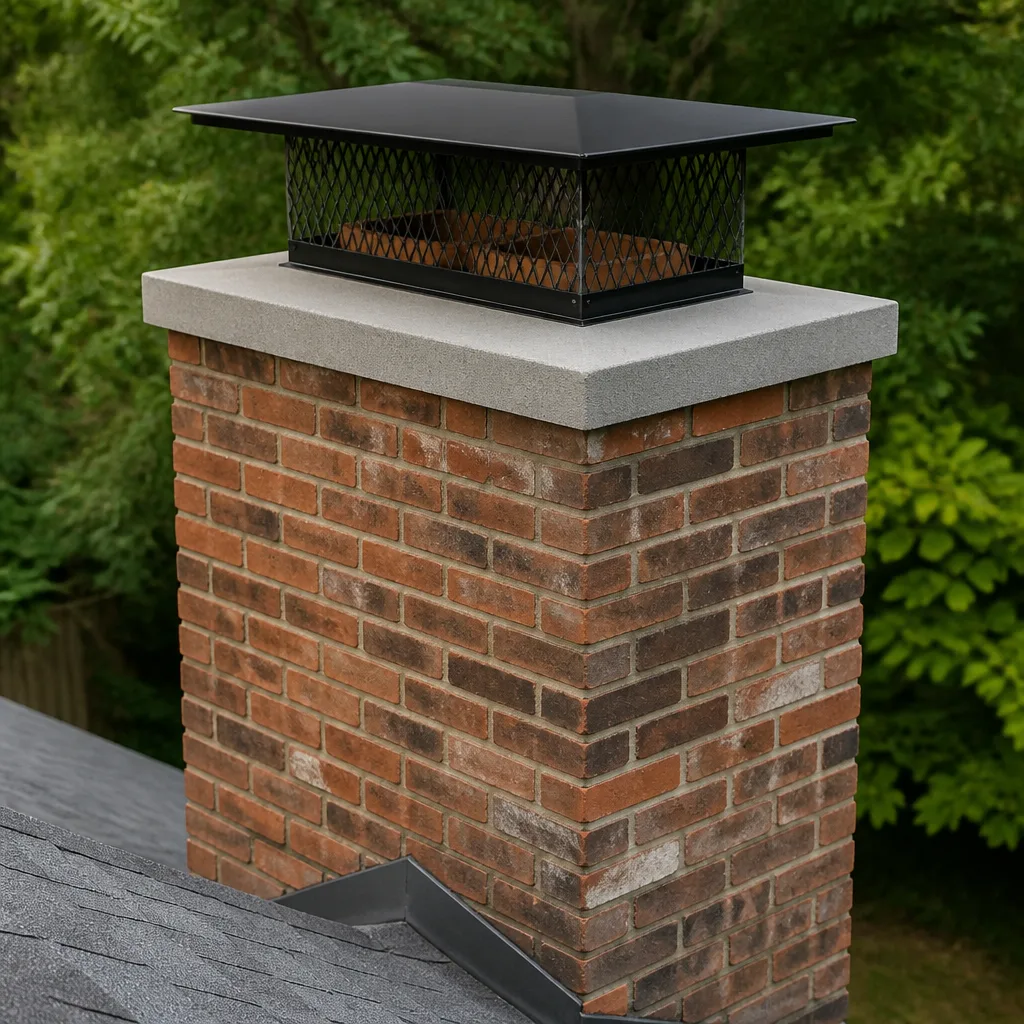
The crown is the concrete or mortar slab at the very top of your chimney, and it’s the single most vulnerable component on any Tampa chimney. It takes direct hits from every rainstorm, every hour of UV exposure, and every degree of temperature swing. When a crown fails, everything below it starts failing too.
A healthy crown should feel solid and look intact: no cracks larger than a hairline, no gaps where it meets the flue pipe, and no places where you can see the brick or stone of the chimney body exposed through the top. A failing crown shows one or more of these signs: visible cracks, missing chunks, a crumbly or sandy texture when touched, or a white chalky deposit that keeps reappearing.
The test homeowners can do safely from the ground: use binoculars or a phone camera with zoom to inspect the crown. Look for any vegetation growing out of the top, which means moisture is pooling there. Look for dark stains that suggest water isn’t running off the way it should. Even from a distance, a crown should look uniform. If yours looks patchy or uneven, that’s worth a professional look.
Soft mortar specifically means the crown material has lost its structural integrity. In Tampa’s climate, that happens faster than in drier regions because the material never really dries out completely between rain events. A soft crown is no longer doing its job, and every rain starts working its way into the chimney body. The repair is usually straightforward and relatively affordable: a crown sealant or a new poured crown. Left alone, the repair becomes a rebuild.
Animal Intrusion Indicators: What Squirrels, Raccoons, and Chimney Swifts Leave Behind
Tampa’s warm climate means animals don’t just use chimneys as winter shelter. They use them year round. Squirrels, raccoons, chimney swifts, and even bats see an uncapped chimney as prime real estate, and they often establish residency before you ever hear or see them. The signs they leave behind are specific.
Squirrels leave twigs, leaves, and small debris at the firebox floor or on the smoke shelf. You might also hear scratching during daylight hours, since squirrels are diurnal. If you find nut shells or acorn fragments in the firebox, that’s a squirrel signal almost nothing else produces.
Raccoons are less subtle. A raccoon in a chimney leaves larger debris: bigger sticks, food remnants, and droppings that are substantial enough to notice. You’ll often hear them at night, and a raccoon can do serious damage to a damper or flue liner while it climbs around. Female raccoons also like chimneys as den sites for raising young, which means an animal issue can become a seasonal recurring problem.
Chimney swifts are the ones most Tampa homeowners don’t recognize until it’s too late. These small, fast birds build nests on the interior flue walls using twigs and their own saliva, which creates a hard, plaster-like material that bonds to the liner. You’ll see small twig fragments in the firebox or hear high-pitched chirping. Swift nests are federally protected while active, so if you suspect swifts, it’s important to address chimney caps and prevention before or after nesting season, not during.
The common denominator in all of these: an uncapped or poorly capped chimney. A proper cap with appropriate screening solves most animal intrusion issues before they start.
The Two-Minute Damper Draft Test
Your damper is the metal plate inside the flue that opens to let smoke out when you’re burning a fire and closes to keep conditioned air in when you’re not. A damper that doesn’t seal properly lets humid Tampa air into the chimney constantly, and that’s the root of many condensation problems we discussed earlier.
Here’s a simple draft test you can do in two minutes, no tools required:
- Make sure the fireplace is cold and has not been used for at least 24 hours.
- Place your hand just inside the fireplace opening, near the top of the firebox, without touching the walls.
- Close the damper and wait about 30 seconds.
- Feel for air movement. A properly sealed damper should produce almost no detectable airflow. A leaky one creates a noticeable draft, especially near the edges.
- Open the damper slightly and feel again. You should feel a clear change in airflow as outside air can now move through the flue.
If you feel a steady draft even with the damper fully closed, that damper isn’t sealing. The fix might be as simple as cleaning the damper seat, or it might mean a warped damper plate that needs replacement. In either case, that air leak is pulling humid Tampa air through your chimney when your fireplace isn’t in use, and that’s how condensation, rust, and musty smells start.
A second test: shine a flashlight up from inside the firebox toward the closed damper. If you can see daylight around the edges, that’s a seal gap you can measure visually.
Post-Storm Chimney Checks: Cap, Flashing, and Crown
After any named storm or hurricane passes through the Tampa Bay area, your chimney should get a specific three-part visual inspection. These are the points that take the most damage, and they’re also the ones you can often assess from ground level with a good pair of binoculars or a phone camera with decent zoom.
Check the cap first. The chimney cap is the metal cover at the very top, and it’s usually the first thing to go in high winds. Look for any visible tilt, missing pieces, or separation from the flue. A cap that’s shifted even an inch is letting rain in, and in a post-storm Tampa environment, that rain is often torrential.
Check the flashing next. Flashing is the metal material that seals the seam where your chimney meets the roof. After heavy wind, flashing can lift, separate, or tear away from the roofline. From the ground, look for any visible gaps between the chimney body and the shingles, or any metal that appears raised or bent. Water that gets past failed flashing travels down the chimney chase and shows up later as ceiling stains, attic moisture, or firebox rust.
Check the crown last. The crown is the masonry surface that surrounds the flue opening at the top. Post-storm inspection should look for any new cracks, missing chunks, or areas where the surface looks freshly exposed or washed out. A crown that survived the storm visually intact may still have hairline cracks that grew under wind pressure, so note any changes from your pre-storm baseline.
If any of these three components look compromised after a storm, don’t wait for the next rain to confirm the leak. The damage compounds quickly in Tampa’s humidity, and what starts as a small flashing gap becomes a mold issue in your attic and a rust problem in your firebox within a few months.
Common Mistakes to Avoid
- Waiting for smoke backup before calling anyone. By the time smoke enters your living room, your flue has a serious obstruction or draft failure. The warning signs we’ve covered appear months earlier, and they’re visible without any special tools.
- Assuming a musty smell means creosote buildup. In Tampa, musty almost always means moisture. Treating moisture as a cleanliness issue means you’ll schedule a sweep and miss the structural problem that’s actually causing it.
- Painting over efflorescence. Paint hides the symptom, but the water keeps moving through the masonry. The paint traps moisture, which accelerates deterioration behind the surface. Efflorescence should be addressed at its source, not covered.
- Skipping post-storm inspections because “the chimney looks fine from the yard.” Failed flashing and cap damage aren’t always visible from ground level without binoculars. The damage is real whether you can see it from the driveway or not.
- Ignoring rust in the firebox because “it’s probably just humid Florida air.” Humidity contributes, but rust means water is moving through the system. Rust never appears without a source.
- Delaying a damper replacement. A damper that doesn’t seal costs you in higher cooling bills, accelerates rust on every metal component above it, and creates the conditions for condensation damage all year long.
- Assuming animal signs are harmless. A squirrel or raccoon in your chimney isn’t just a nuisance. They damage flue liners with claws and nesting material, and their debris creates fire hazards when you eventually go to light a fire.
See the difference
 Before
 After
After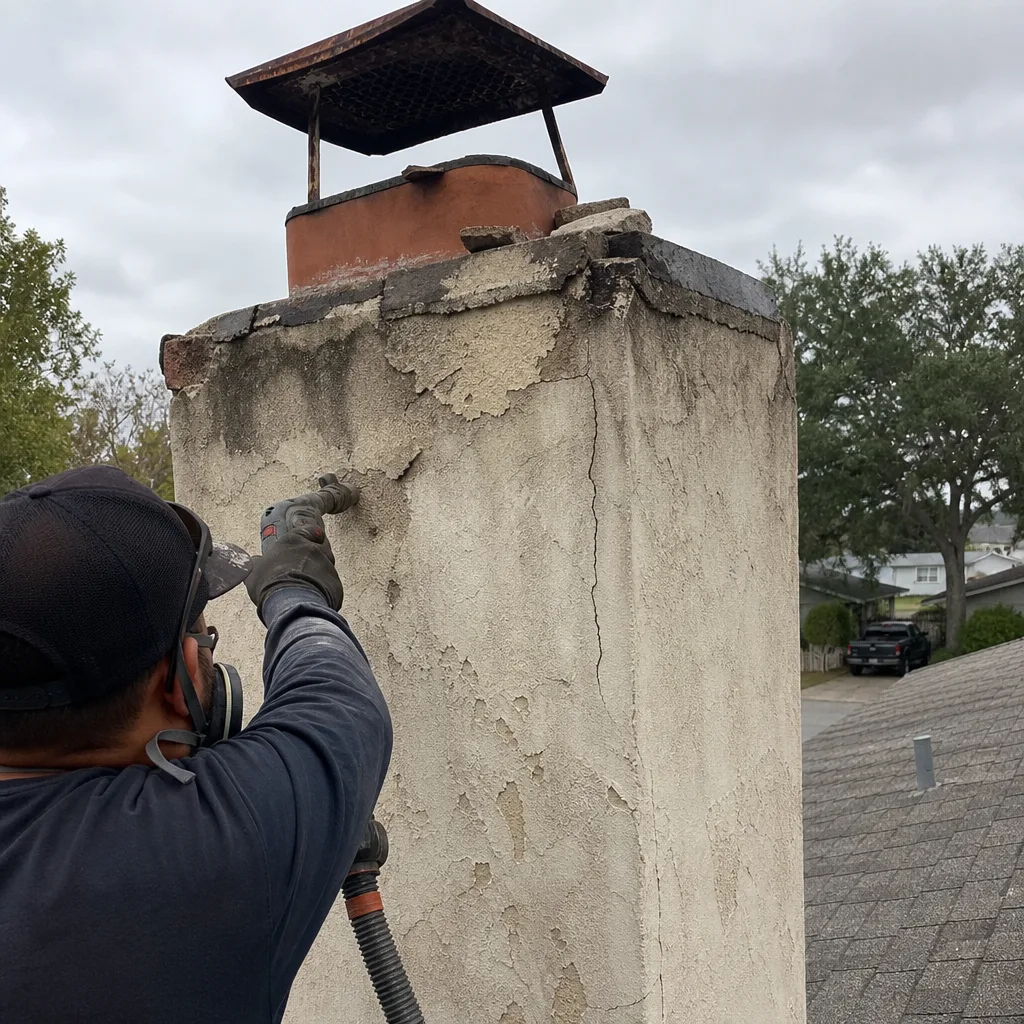 Before
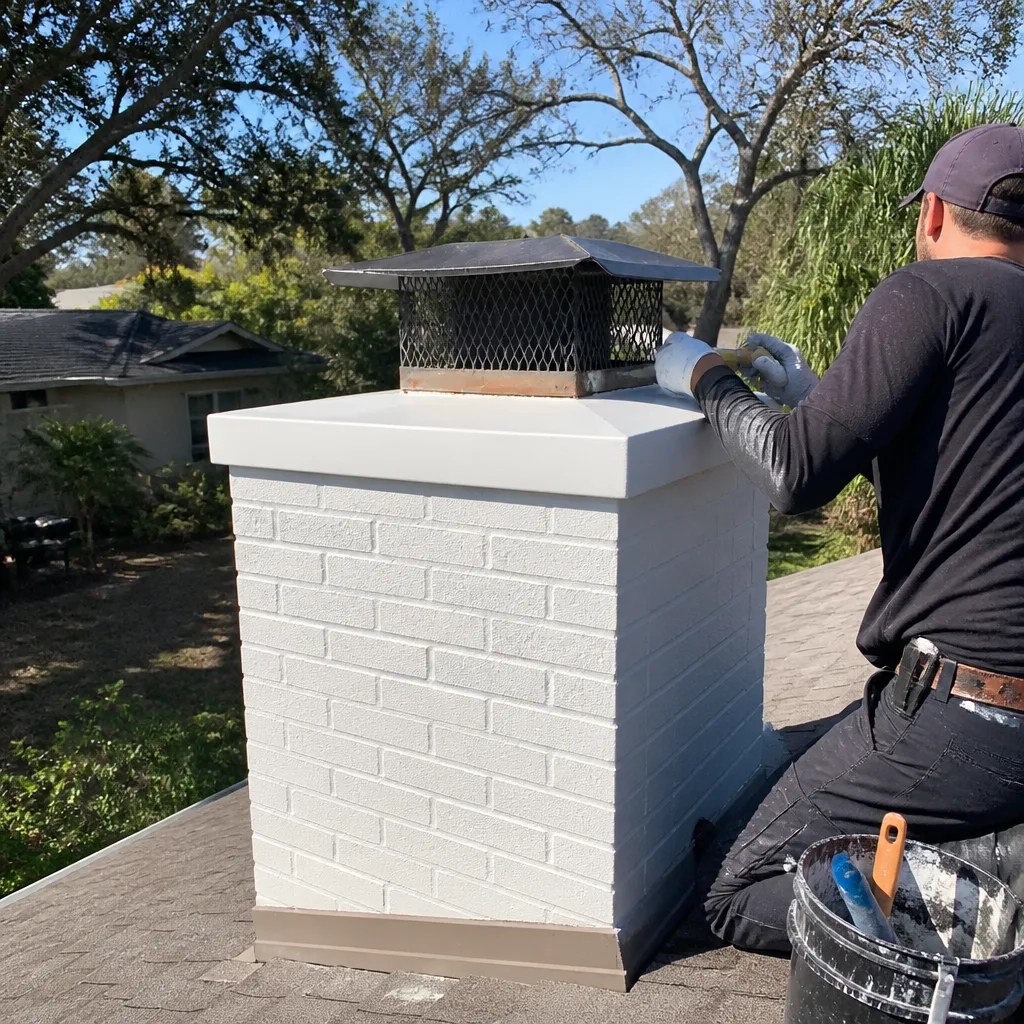 After
After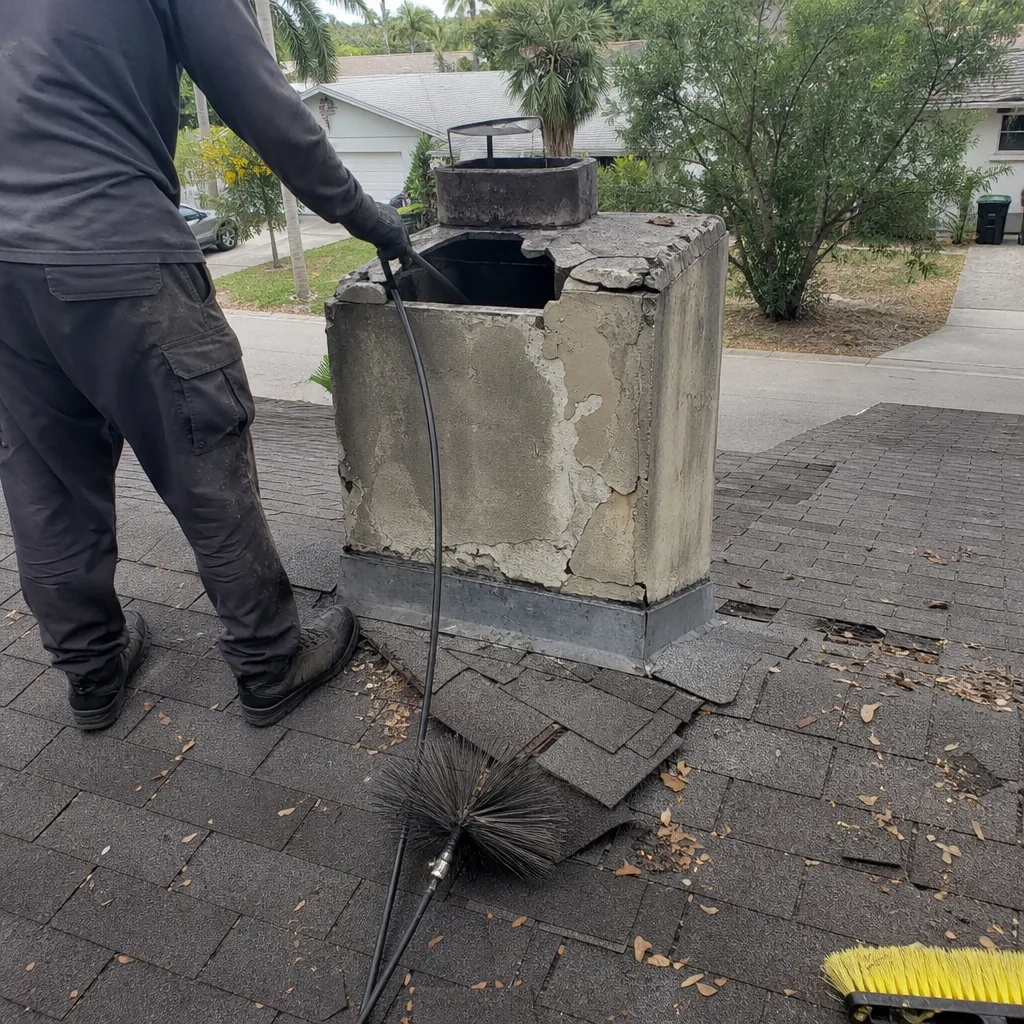 Before
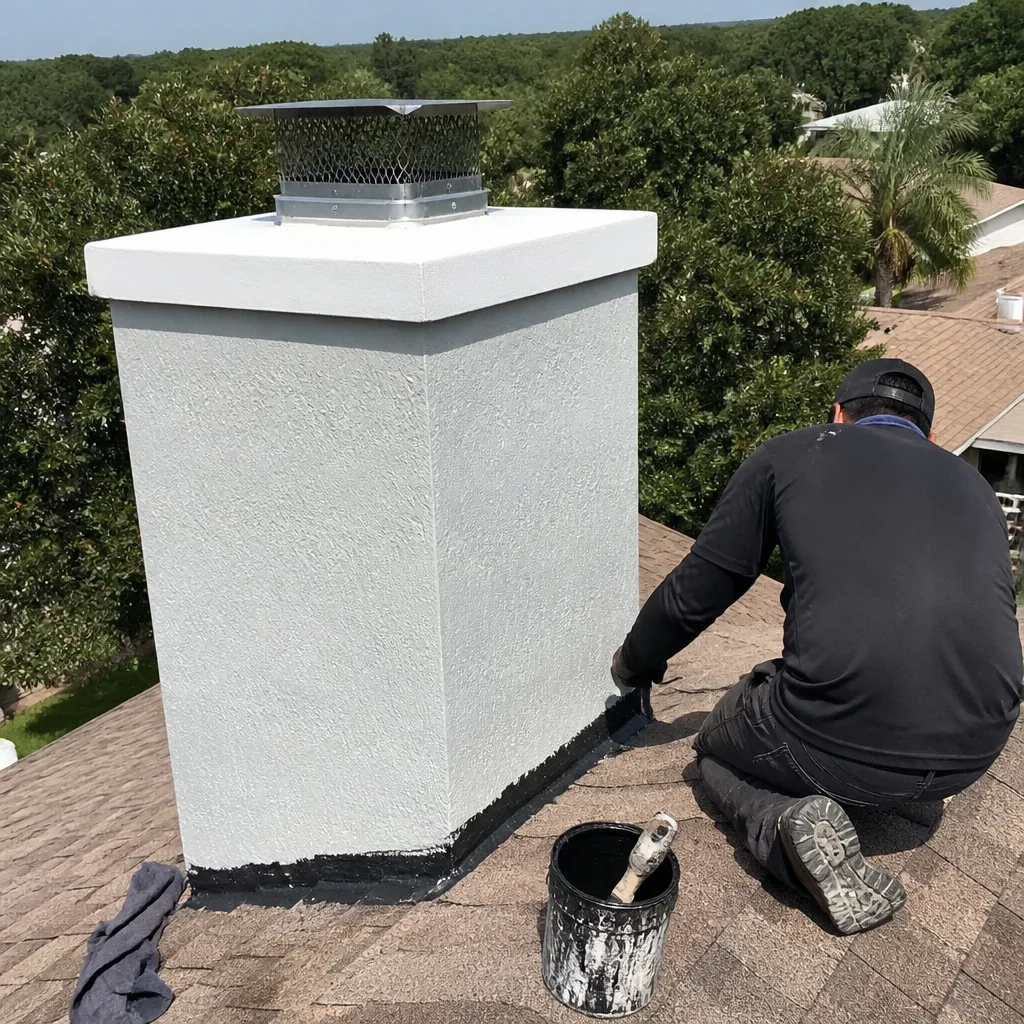 After
AfterWhen to Call a Professional
If you’ve found efflorescence that’s spreading, rust that’s new or worsening, a musty smell that recurs after every rain, or any signs of animal activity in your firebox, a professional inspection is the next step. These aren’t DIY fixes, and they get more expensive the longer they wait. Hadley Chimney Tampa offers free estimates in Tampa, and we bring camera equipment to document exactly what we find so you can see the problem yourself, not just take our word for it. Call (850) 790-3475 to schedule an inspection. If you’re unsure whether what you’re seeing counts as a warning sign, send us photos and we’ll tell you straight whether it needs immediate attention or can safely wait.
Frequently Asked Questions
How much does a chimney sweep cost in Tampa?
A standard chimney sweep in Tampa typically runs $150 to $300 for a routine cleaning that includes the firebox, flue, and damper area. If you’re adding a full inspection with camera documentation or have significant creosote buildup, expect to pay toward the higher end. For an exact quote based on your chimney’s condition, call (850) 790-3475. Estimates are free.
How often should a chimney be swept?
The National Fire Protection Association recommends a chimney inspection at least once a year, and a sweep whenever creosote buildup reaches 1/8 inch or more. For Tampa homeowners who use their fireplace seasonally or not at all, an annual inspection still matters because moisture and animal intrusion happen year-round. Call (850) 790-3475 if it’s been more than 12 months since your last inspection.
Do I really need a new liner, or can it be repaired?
Not every liner problem requires a full replacement. A camera inspection will show whether the liner has small cracks that can be sealed with a product like HeatShield ceramic repair compound, or whether the damage is too extensive and a new liner makes more sense. The important thing is verifying the problem visually before committing to any expensive work. We show you the camera footage so you can see the condition for yourself. Call (850) 790-3475 for a camera inspection.
What actually happens if I skip my chimney inspection?
Skipping inspection means you miss the early warning signs: efflorescence that’s spreading, a damper that stopped sealing, a cap that’s shifted. Each of these becomes more expensive over time. The chimney fire risk comes from creosote buildup, and the structural risk comes from moisture penetration that never gets addressed. Neither of those gets better by waiting.
Can I use my fireplace after a hurricane in Tampa?
Not until you’ve done a visual check of the cap, flashing, and crown, and ideally had a professional inspection. Post-storm damage often isn’t obvious from inside the house, and a damaged cap or crown can send rain directly into your flue. If you’re unsure, call (850) 790-3475 and we’ll help you figure out whether a full inspection is needed.
What’s the most common chimney problem Hadley sees in Tampa?
In our experience, moisture intrusion at the crown and cap is the most common issue, and it’s usually the root cause behind what homeowners describe as “just a smell” or “a little rust.” Tampa’s humidity and storms make the crown area work harder than it does in most climates, and small failures there create cascading problems below. That’s why our Chimney Repair in Tampa service always starts with the top of the system and works downward.
The Bottom Line
Tampa chimneys fail differently than chimneys in colder, drier climates. The early warnings here are tied to moisture: efflorescence on the chase, rust in the firebox, musty smells after rain, and soft mortar at the crown. These symptoms show up months before any smoke backup or strong creosote odor, and they’re visible to any homeowner who knows what to look for. If you’ve spotted any of the indicators in this guide, or if it’s been more than a year since your last inspection, call Hadley Chimney Tampa at (850) 790-3475. We’ll show you what’s happening, document it with photos, and give you a written price before any work starts. To learn more about our Chimney Sweep in Tampa services or get a detailed look at what a professional inspection covers, explore the rest of our Hadley Chimney Tampa home resources. For gas fireplace owners, we also provide Gas Fireplace Repair in Tampa with the same visibility and written pricing on every job.
Written by Cory Mitchell, Owner at Hadley Chimney Tampa, serving Tampa since 2003.